Most old family photographs have no date. Yet a photograph is full of clues: its shape, its card, its clothes, even the way its edges are cut. Learning to read them lets you place a picture within a decade or two, and a rough date is much better than none. This guide covers the clues that help most, and how to record what you learn.
Start with the type of photograph
The format is the first clue. Early portraits made on metal or glass, such as daguerreotypes, belong to the middle of the 1800s. Small portraits mounted on thin cards, called cartes de visite, were popular from about the 1860s. Larger cabinet cards followed, and were common until around the early 1900s. Snapshots taken on simple box cameras start to appear around 1900. Colour prints become common in family collections from around the 1960s. These dates are broad, but they narrow the search at once.
Look at the card and the back
A photograph mounted on card often carries the photographer’s name and address, printed in a style that changes with the decade. Thin cards and plain borders point earlier. Thicker cards with decorative edges and gold lettering point later. If a photographer’s studio is named, look for it in local records, since the years a studio operated give the earliest and latest dates. Look at the back for stamps, handwriting, pencil notes and lab marks.
Study the edges and the paper
The edge of a print changes with the era. Prints with a white border were common in the middle of the 1900s. A scalloped or deckled edge is typical of the 1950s and 1960s. Small square prints with a wide white border belong to the 1960s and 1970s. A date stamp or a code in the margin of a lab print, usually a month and a year, is a gift: take it as the date of printing, which is close to the date of the picture.
Read the clothes and hairstyles
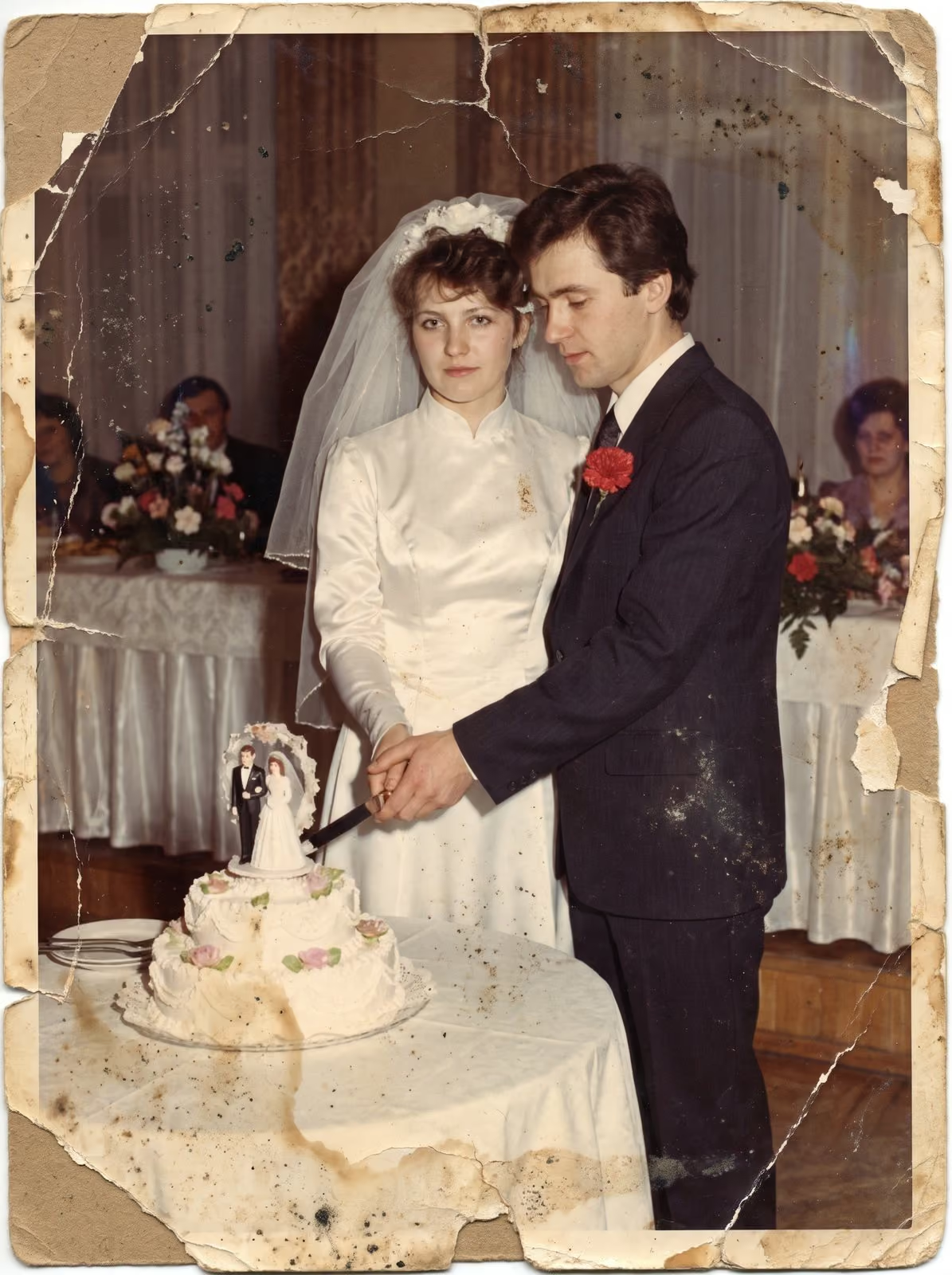
Fashion changes steadily and leaves clear marks. Look at collars, hats, sleeves, ties and hems. Women’s hairstyles and men’s moustaches shift in recognisable ways from decade to decade. Look at children’s clothes too, because they change faster than adult clothes. A library book on fashion history, or a search through dated catalogues, helps you match what you see.
Look at what is behind the people
Cars, bicycles, street signs, shop fronts, furniture and wallpaper all carry dates. A car in the background often gives a clear range of years. Look for posters, calendars and newspapers in the frame. Zoom into the scan, and look at details that are small in the print.
Ask the family
The best evidence is often in memory. Ask the oldest relatives to look at the picture, and record what they say, including how sure they are. Ask when and where they think it was taken, and who else was there. Write their answers down, and keep their names, because their testimony is part of the record.
Combine the clues
No single clue settles it. A card style that began in the 1880s and a hat style from the 1890s together make a strong case for the 1890s. Write a date range, for example “about 1892 to 1898”, and note the evidence. If a later clue contradicts the first, revise.
Record what you learn
Add the estimate to the photograph’s file name and caption, with the word “circa” or the letter c. Keep a note of how you reached it. Do not write on the original. Use a soft pencil, lightly, on the back edge if you must, or put the note in the file. See how to organise scanned photos.
When restoration helps
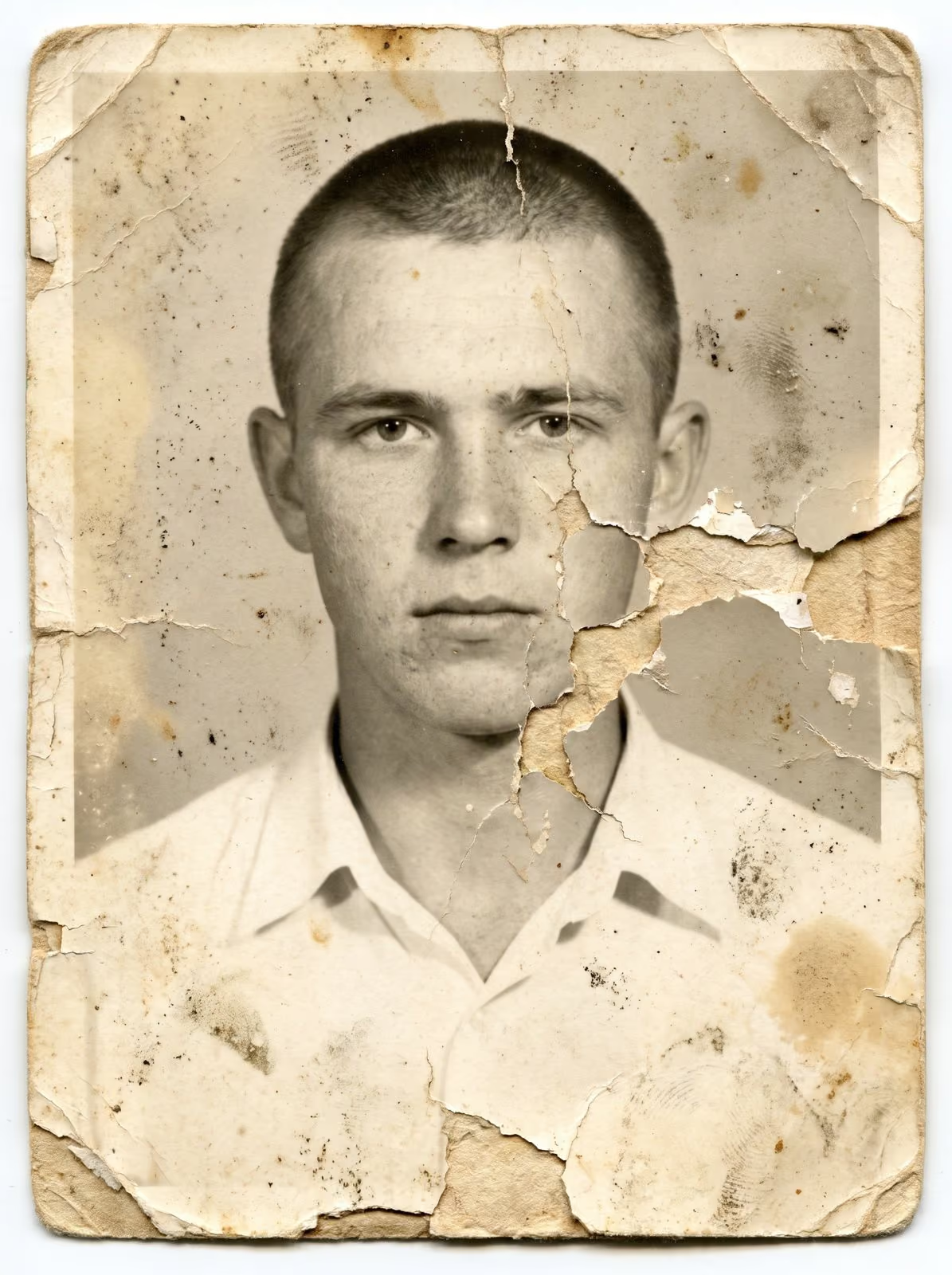
Clues are easier to read in a clear picture. Fading, stains and cracks hide details such as a studio stamp or a street sign. A careful scan and a restoration can bring them out. See photo restoration and the guide to what can and cannot be restored.
Related guides
To scan a collection well, read how to prepare photos and film for scanning. To keep the finished archive safe, see how to preserve a family photo archive.
Send me a photograph
If you have a picture whose details are hard to see, send me a scan. I tell you what can be recovered, and I can often make small details clearer. You can request a restoration quote here, and call, email or message me using the details at the bottom of this page.