Restoration can do a lot, and it has limits. Knowing both saves you from false hope and from giving up on a photograph that can be rescued.
Damage that repairs well
- Dust, specks and small scratches. These sit on the surface and are removed cleanly.
- Fading and yellowing. Lost contrast and colour cast can be corrected because the information is still in the print.
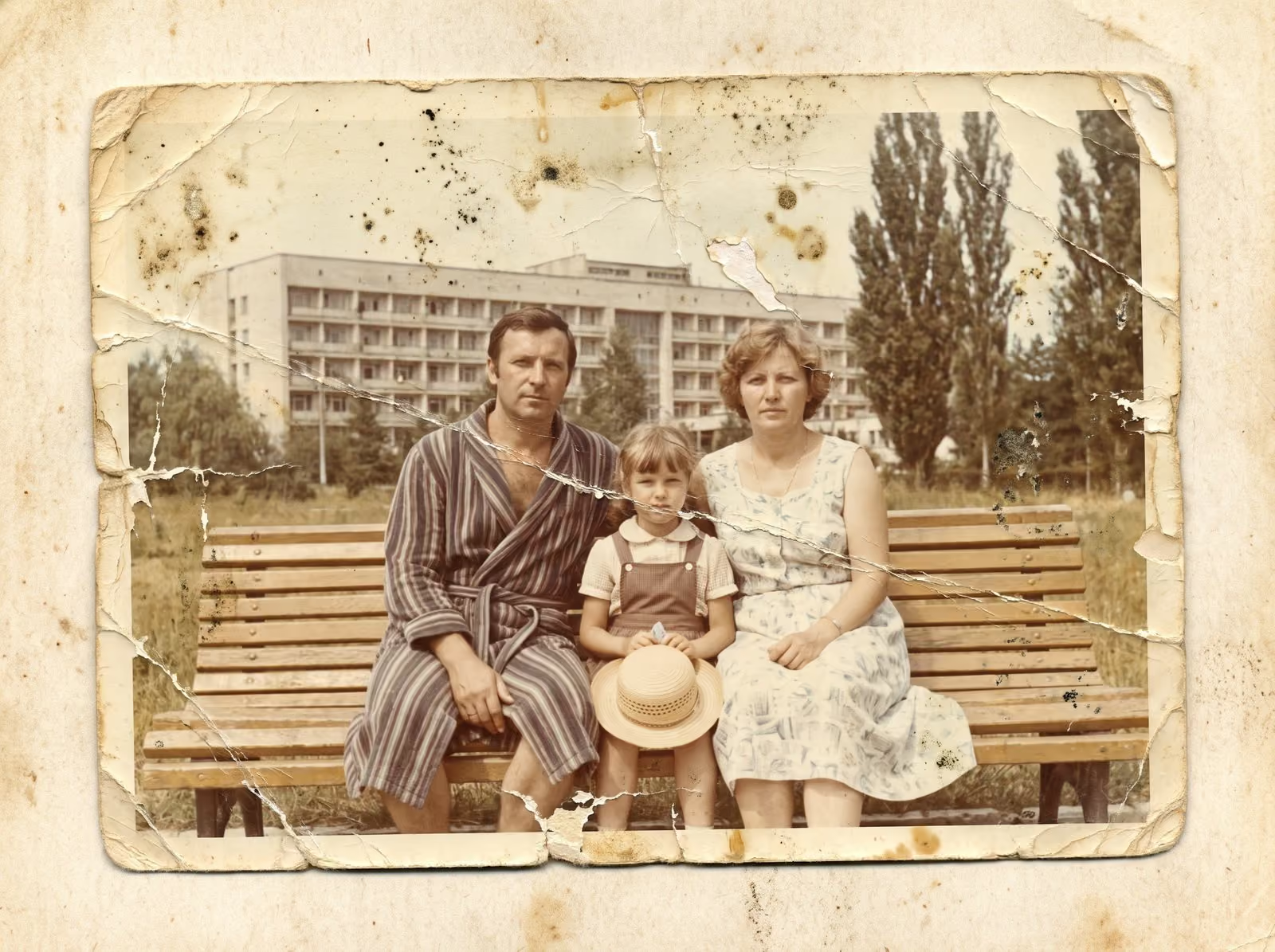
- Creases and folds. A crease through a sky or a wall is straightforward. A crease through a face takes patience.
- Stains and water marks. These repair well when the picture under them is still visible.
Damage that takes more work
- Cracks and tears through faces. The face is rebuilt from the parts still there, with care for the person’s real features.
- Mould and heavy spotting. Many small marks across the image take time, but they are fixable.
- Missing corners and edges. Backgrounds can be rebuilt. Missing parts of people are harder.
- Soft or blurry faces. I can bring out detail the print holds. I cannot create detail it never recorded.
What no one can bring back
- A face that is completely gone. Anything I drew in would be a guess.
- Detail that was never in the photograph, for example the eyes of someone far from the camera.
- A print that has dissolved or flaked away in large areas.
When a photo has gaps like these, I tell you what I can honestly do before you pay for it. Sometimes the best result is a clean, stable photograph with the gap left visible, rather than an invented replacement.
By hand, not by an app
Automatic tools fill gaps with a guess and often change faces. I work from the photograph itself and keep the person recognisable. That takes longer, and the result still looks like your photograph.
How to find out
Send me a scan or a phone photo of the damaged print. I tell you what is realistic and quote the work. See photo restoration and the restoration portfolio for examples.
How I judge a photograph
When a scan or a phone photo arrives, I look at four things. First, where the damage is. Damage across a sky or a wall is easier than damage across a face. Second, how much picture is left. A crack removes a thin line of information, while a missing corner removes an area. Third, the resolution of the original: a sharp, well-scanned print gives me far more to work with than a blurry copy. Fourth, what the photo is for. A portrait for a funeral program needs different care from a snapshot for an album.
Examples of what the work looks like
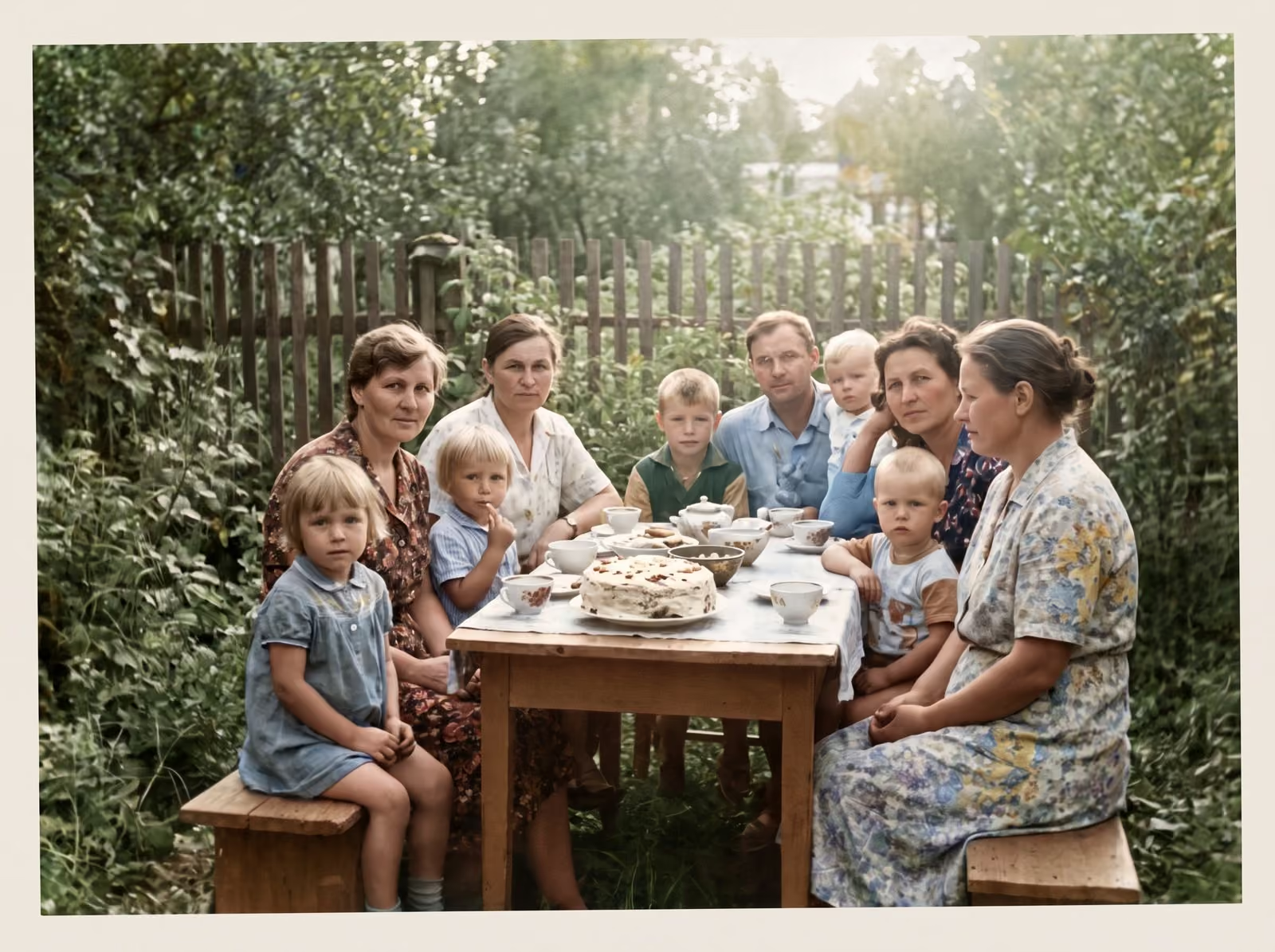
A torn print with a crease across the sleeve of a coat is a common case: the tear is rebuilt along the fabric, and the crease disappears. A group photograph with white spots across the faces needs the faces repaired one by one, so that all of them are treated alike. A faded colour print needs the colour brought back in a way that matches the skin, the clothes and the light. You can see pairs like these in the restoration portfolio, and drag each image to compare.
Questions to ask before you start
- Do you have the original, or only a copy? The original, scanned properly, gives the best result.
- Are there other copies, such as a negative or another print? A second copy can fill in what the first one lost.
- Do other family members remember details, such as the colour of a dress? That helps with colour work.
Related guides
If your photos are wet, mouldy or torn right now, read first aid for damaged photographs. To understand what restoration costs, see what affects the price of photo restoration. If you are thinking about colour, read should you colourise a black and white photo.
Send me the photo
You do not need to decide anything yet. Send a scan or a phone photo, and I tell you what I can do, what I cannot, and what it costs. You can request a restoration quote here, or reach me by phone, email or WhatsApp using the details at the bottom of this page.