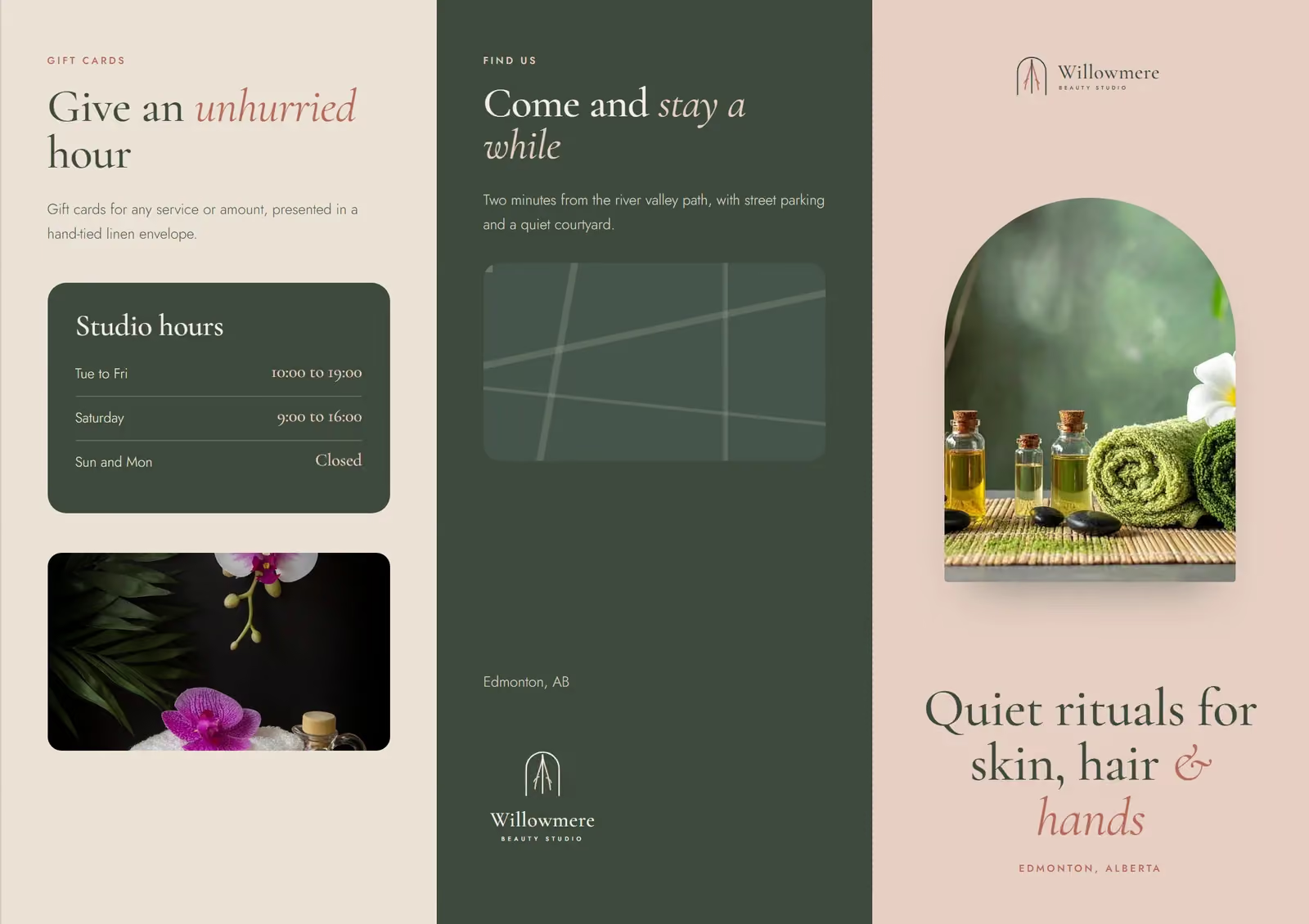
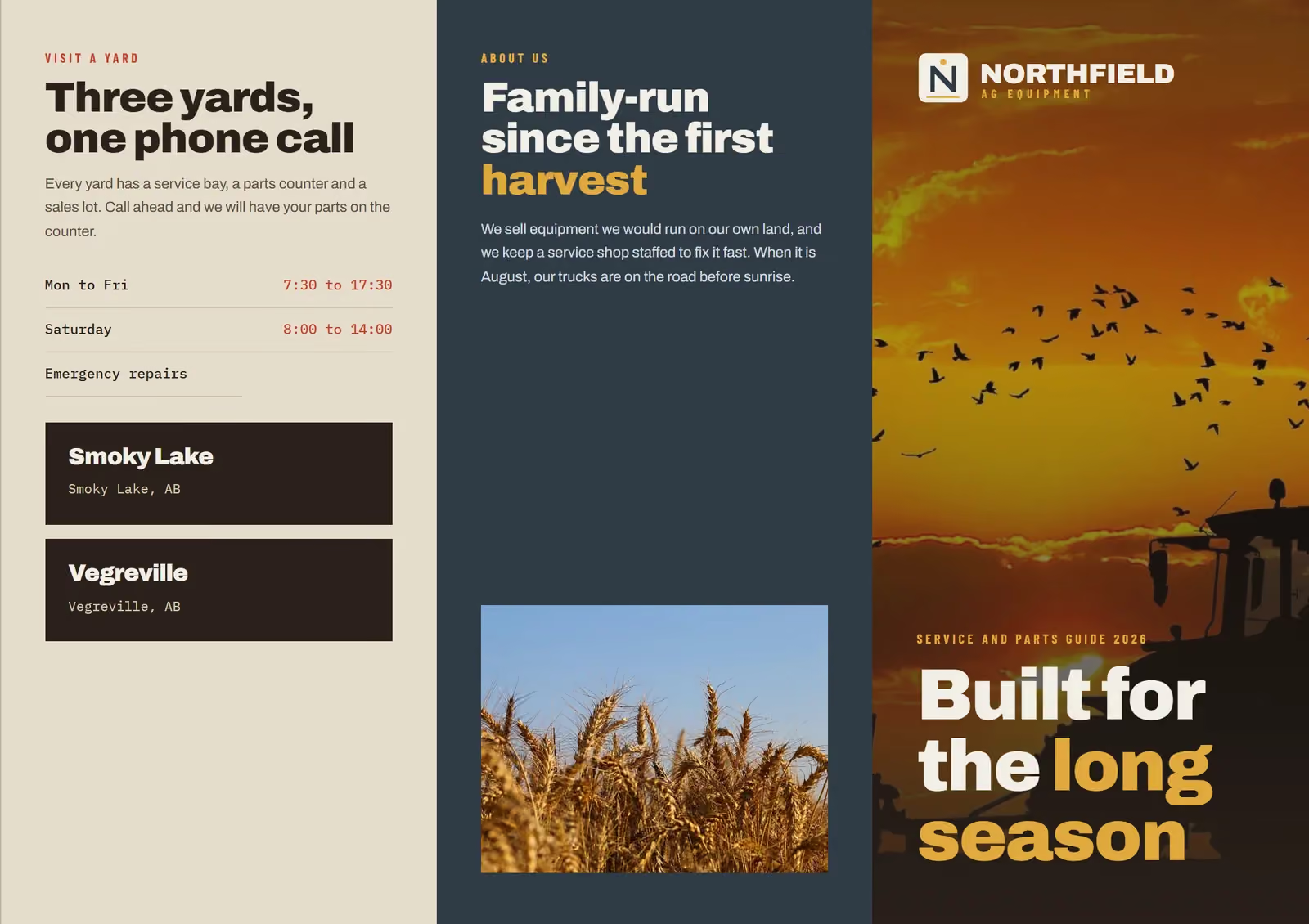
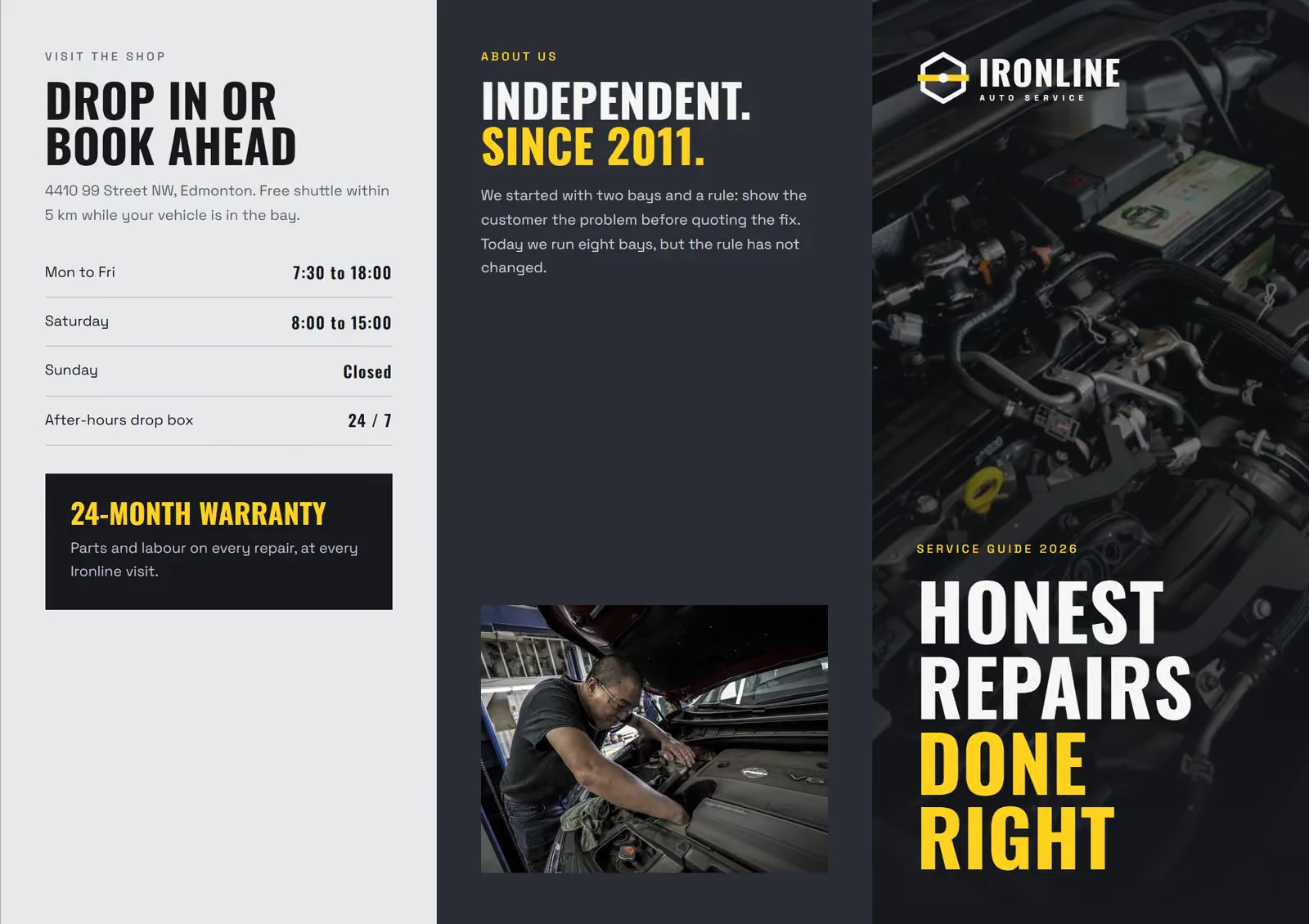
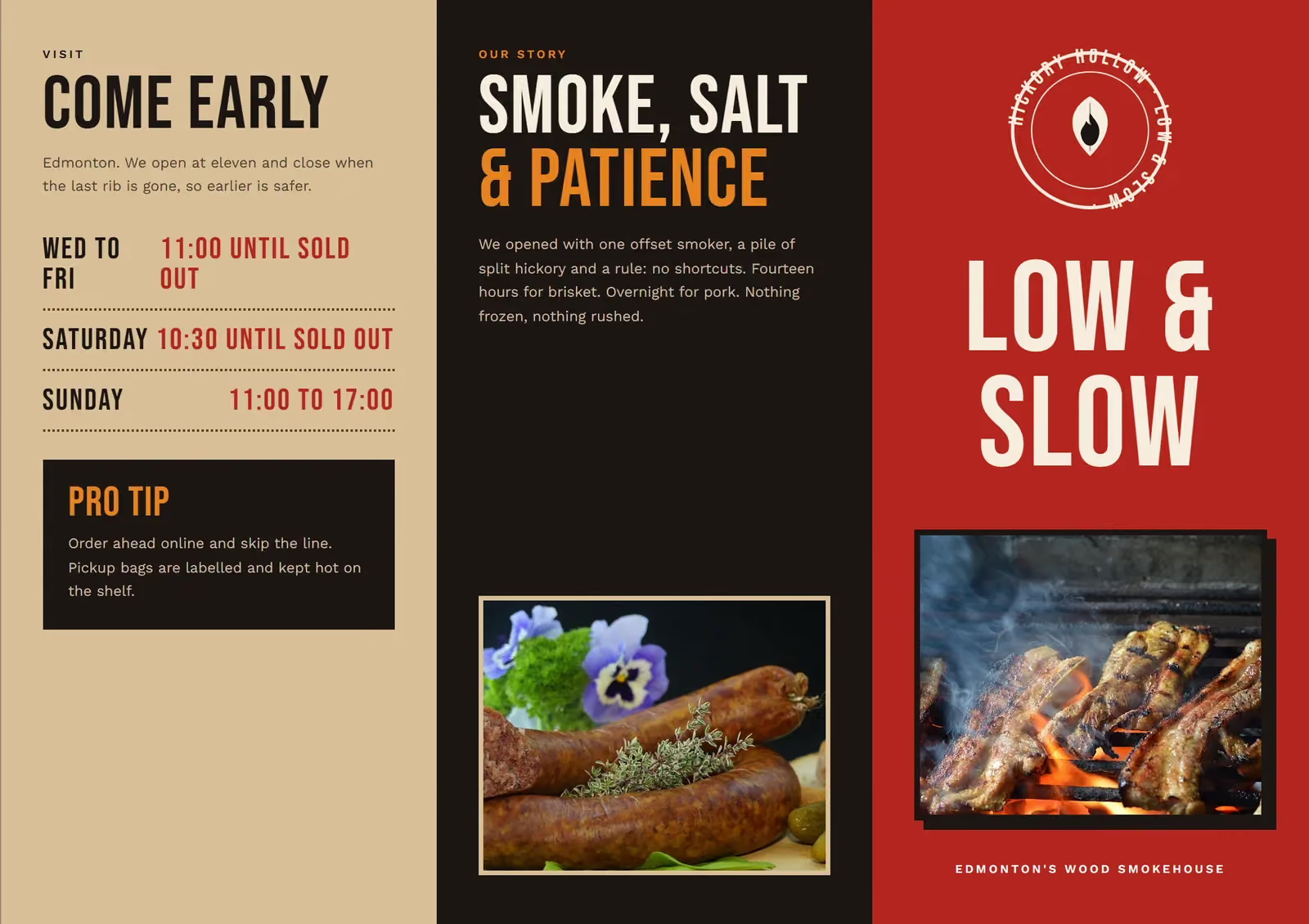
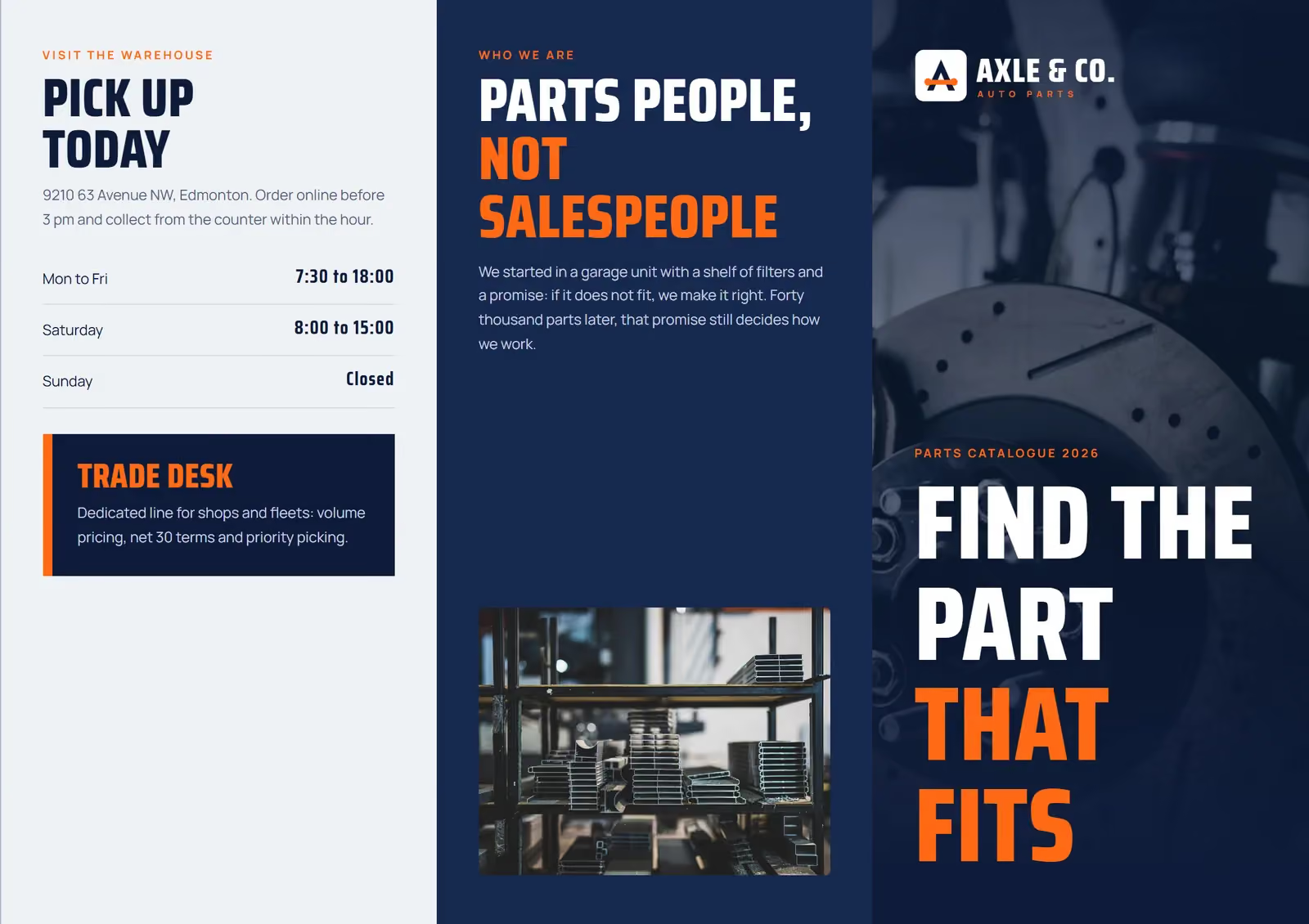
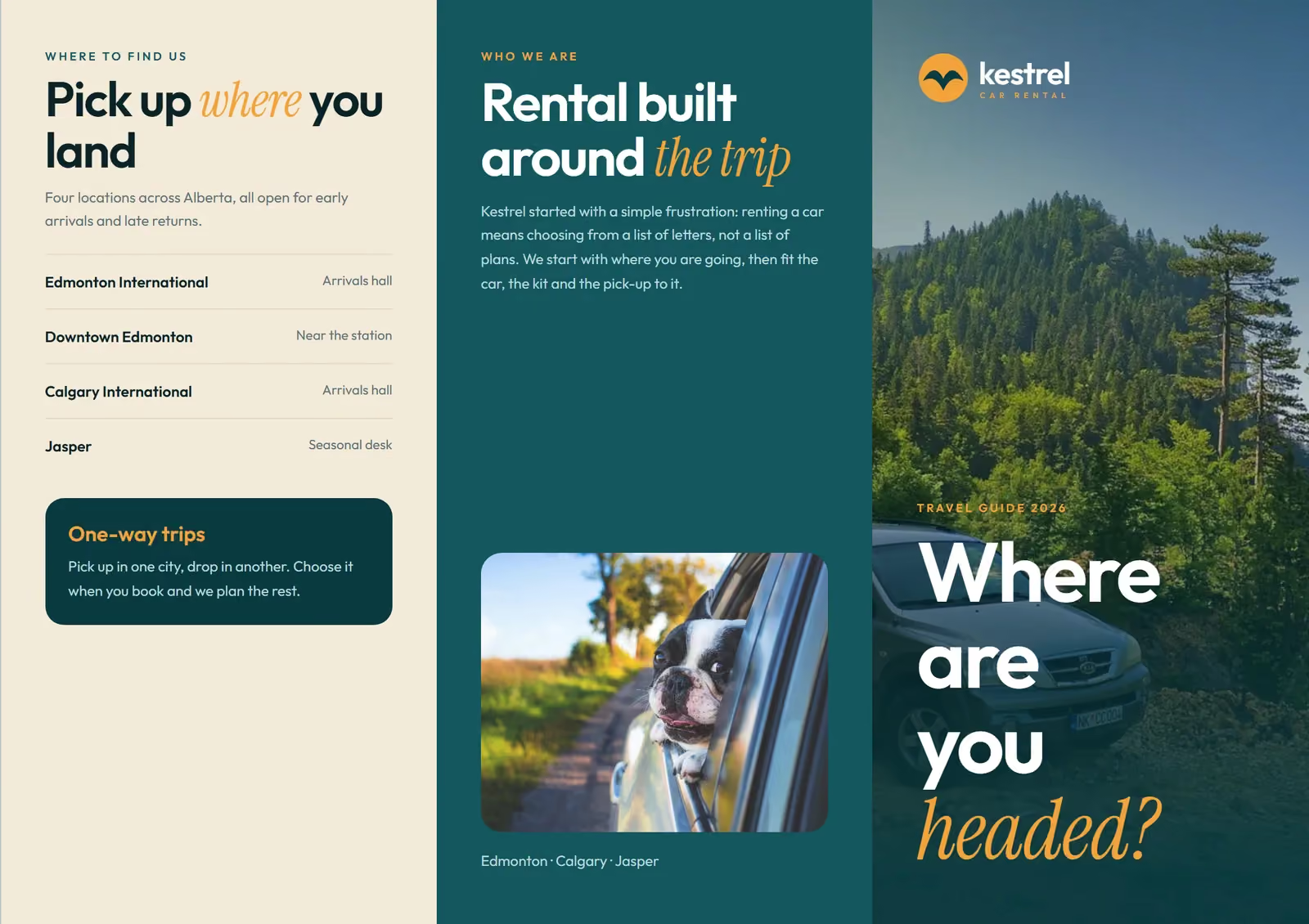
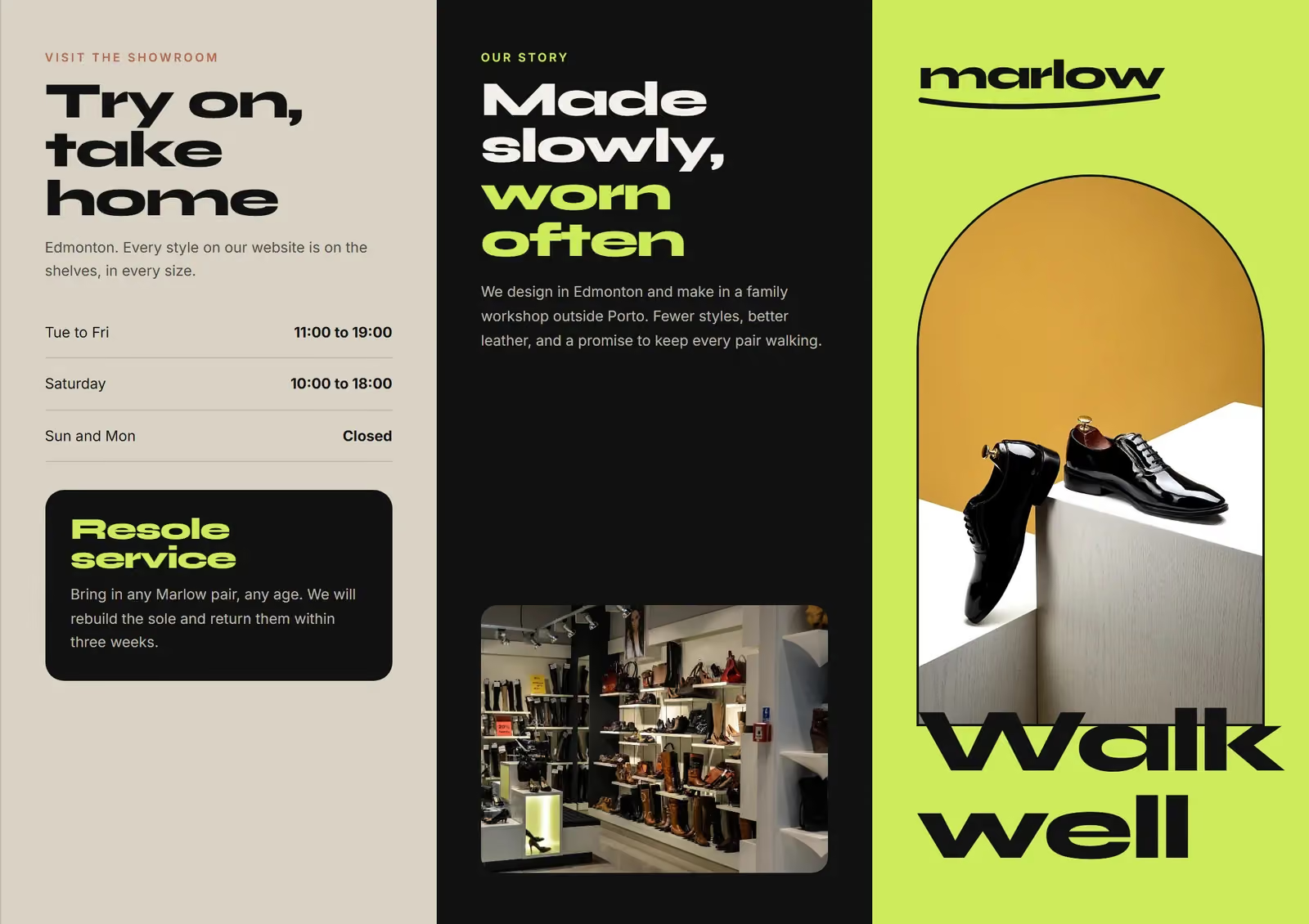
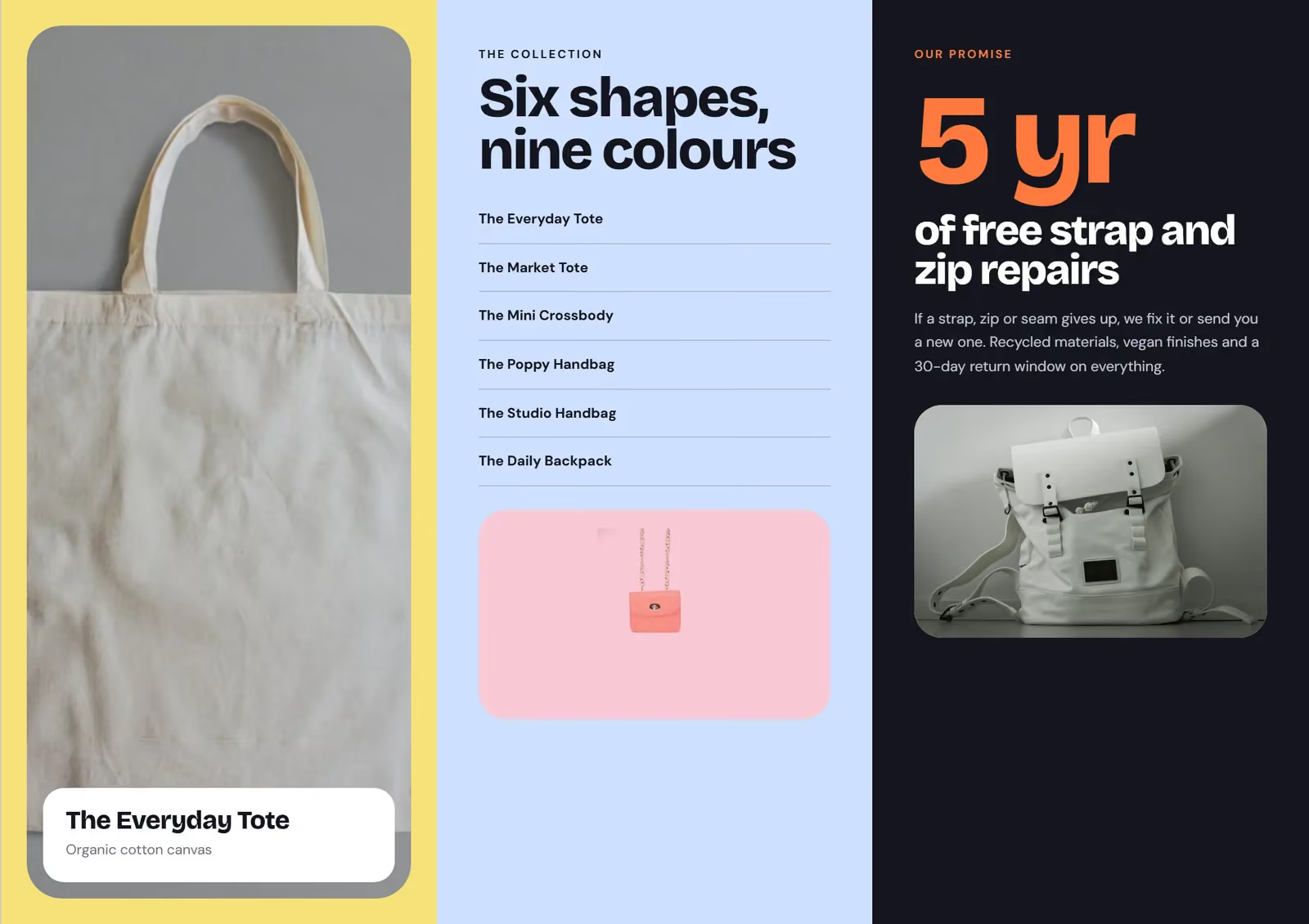
A brochure still earns its place on a counter, at an event and in a mailbox. People keep it, fold it open and read it at their own pace. That only works if each panel has a job and the whole thing leads to one action.
What I design
- Tri-fold brochures and leaflets
- Multi-page booklets and catalogues
- Menus, service guides and event programmes
- Covers that make people pick them up
How a good brochure is built
The outside panels do the persuading: a cover that names the benefit, a flap that answers where and when, a back that tells your story. The inside panels do the explaining: what you offer, how it works and what to do next. I plan these panels before I place a single photo.
How it works
- We agree who the brochure is for, where it will be handed out and what you want readers to do.
- You see a layout and a draft of the panels.
- I refine the design with your feedback and prepare print-ready files.
Examples
Every project in the design portfolio includes a tri-fold brochure with downloadable PDF spreads. Open one to see how the panels work together.
Need the brand to match? See brand identity design.
Fold types and panel sizes
A tri-fold is one sheet folded into three panels. A roll fold has two wide panels and one slightly narrower panel that folds in first. A Z-fold has three equal panels. On a letter sheet the panels are about 3 11/16 in and 3 5/8 in for a roll fold, and about 3 2/3 in for a Z-fold. I set up every file with the right folds, bleed and safe area.
Read more in these guides: