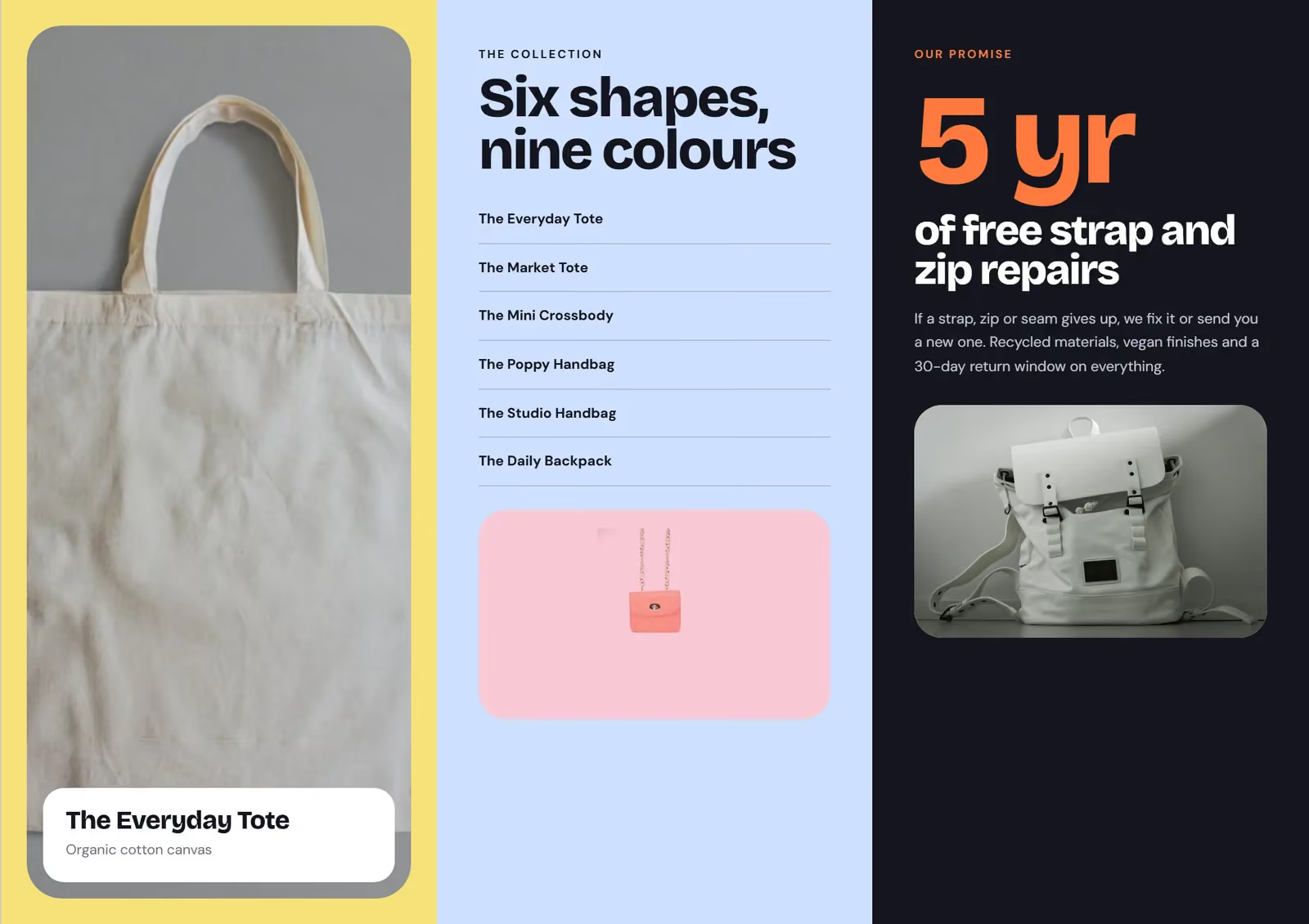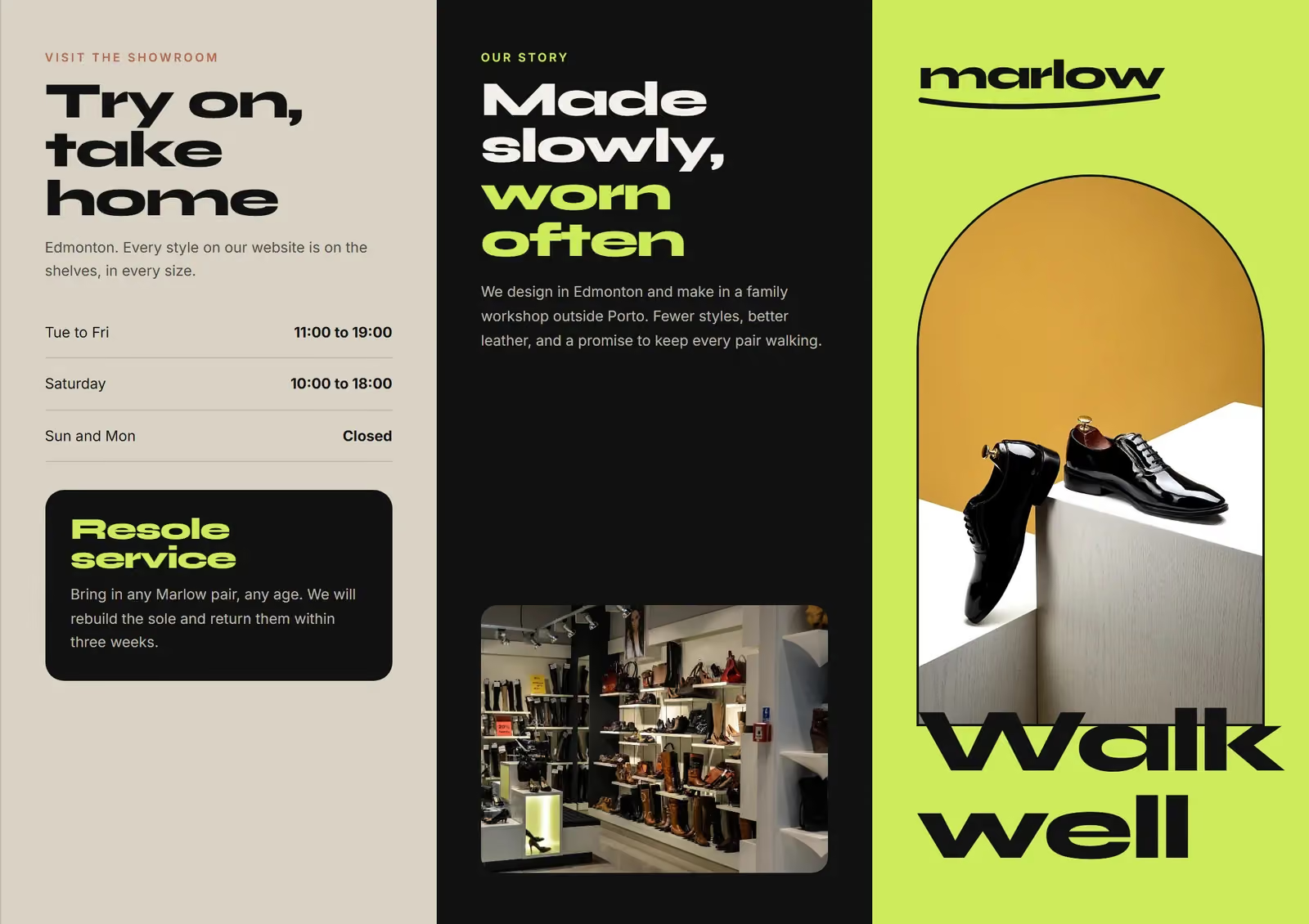
A tri-fold brochure is one sheet of paper folded into three panels. It sounds simple until you design one and find that the panel you wanted on the front ends up hidden inside. The way the sheet folds decides where every word and picture lands. This guide explains the two folds you will meet most often, the roll fold and the Z-fold, and shows how to check a fold before you print.
The roll fold, also called the letter fold
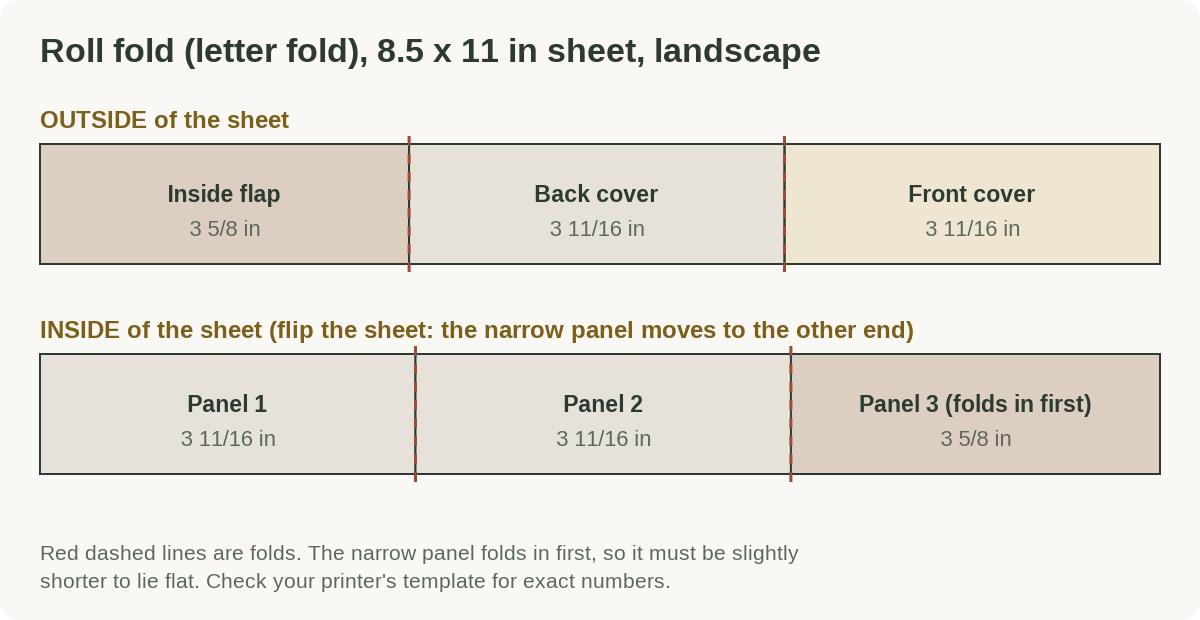
The roll fold is the classic tri-fold. You fold it the way you fold a business letter to fit an envelope. One end panel folds in over the middle panel, and the other end panel folds over the top of it. The result is a neat stack of three panels with a front cover, a back cover and an inside flap.
On a letter-size sheet turned sideways, the panels are not equal. The panel that folds in first is slightly narrower, so it can sit inside without buckling. A typical template uses about 3 11/16 in for the two wider panels and about 3 5/8 in for the narrow one.
What you see when you open it
- The front cover is the first thing anyone sees.
- When you open the cover, you see the inside flap on one side and the first inside panel on the other. The flap is the outside face of the narrow panel.
- When you open the flap, the full inside spread appears: three panels side by side.
- The back cover is the outside face of the middle panel, so it ends up on the back of the folded brochure. It carries contact details.
The Z-fold, also called the accordion fold
A Z-fold folds back and forth, like an accordion. The three panels are equal, about 3 2/3 in each on a letter sheet. Nothing tucks inside another panel, so the sheet opens in one move into a long strip.
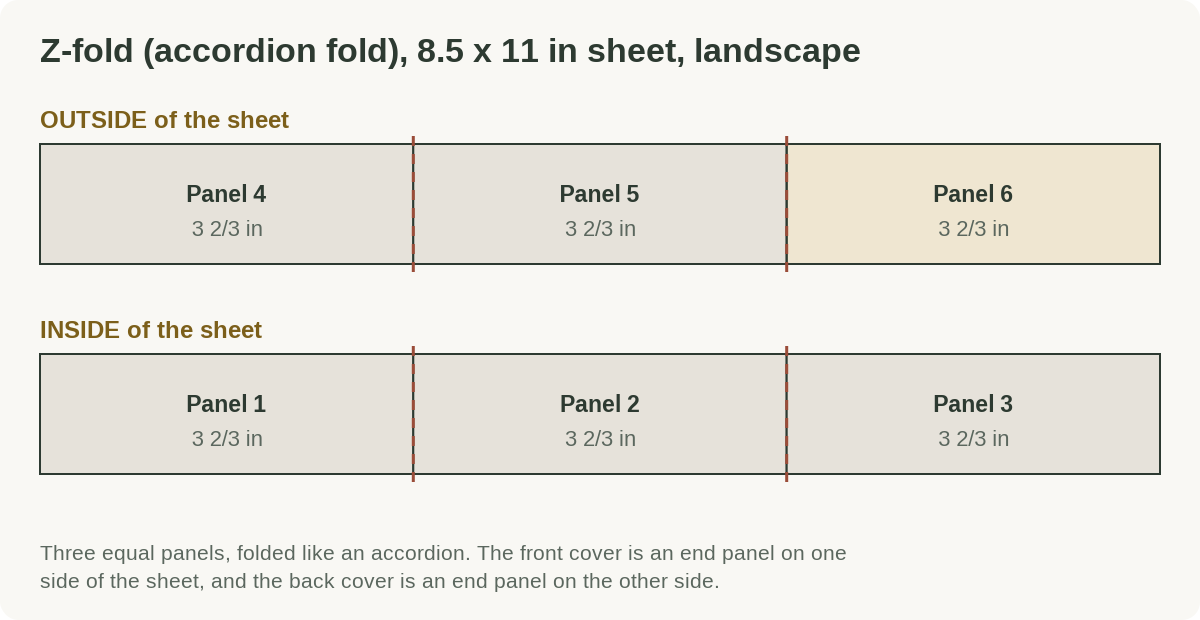
A Z-fold suits content that tells a story from left to right, such as a timeline, a menu or a set of steps. It also suits a brochure you want people to open fully at once, because the whole inside spread appears together.
Which fold should you choose?
- Choose a roll fold when you want a reveal: a strong cover, a surprise on opening and a full spread inside. It is the usual choice for service businesses, clinics and real estate.
- Choose a Z-fold when the content flows in a line and you want readers to see all of it at once.
Both folds use the same sheet. The choice is about how people read, not about cost.
Why one panel is narrower
Paper has thickness. When you fold a panel in, it takes up a little room, and the panel that wraps around it needs a little extra width to close without a bulge. That is why the narrow panel in a roll fold is a few hundredths of an inch shorter than the others. If you ignore this and cut three equal panels, the brochure will not lie flat. The flap will curl, and the fold will look forced.
How to check your fold before printing
- Print a draft at full size on ordinary paper and fold it by hand.
- Open it panel by panel and read it the way a customer would. Check that the front cover opens to the content you planned.
- Check the text near the folds. Keep text well away from a fold, because the paper bends there. Printers often suggest about 0.25 in.
- Check the narrow panel. Make sure nothing important is cut off or squeezed.
- Ask your printer for a template. Fold sizes vary a little between printers, so a template from the printer who will print your job beats any rule of thumb.
Common mistakes
- Placing the wrong panel on the front, because the file was laid out in reading order instead of fold order
- Using equal panels on a roll fold
- Running a headline or a face across a fold
- Putting the call to action on the inside flap, where it is easy to miss
Related guides
For sizes in inches and millimetres, read tri-fold brochure dimensions and panel sizes. To plan what goes on each panel, read how to plan a tri-fold brochure that gets read. For the file itself, read how to prepare a print-ready brochure file.
Want a brochure designed for you?
I design tri-fold and other brochures with the folds worked out, the panels in the right order and print-ready files. Tell me about your business and your customers, and I reply with a plan and a quote. You can request a design quote here, read about brochure and booklet design, and call, email or message me using the details at the bottom of this page.