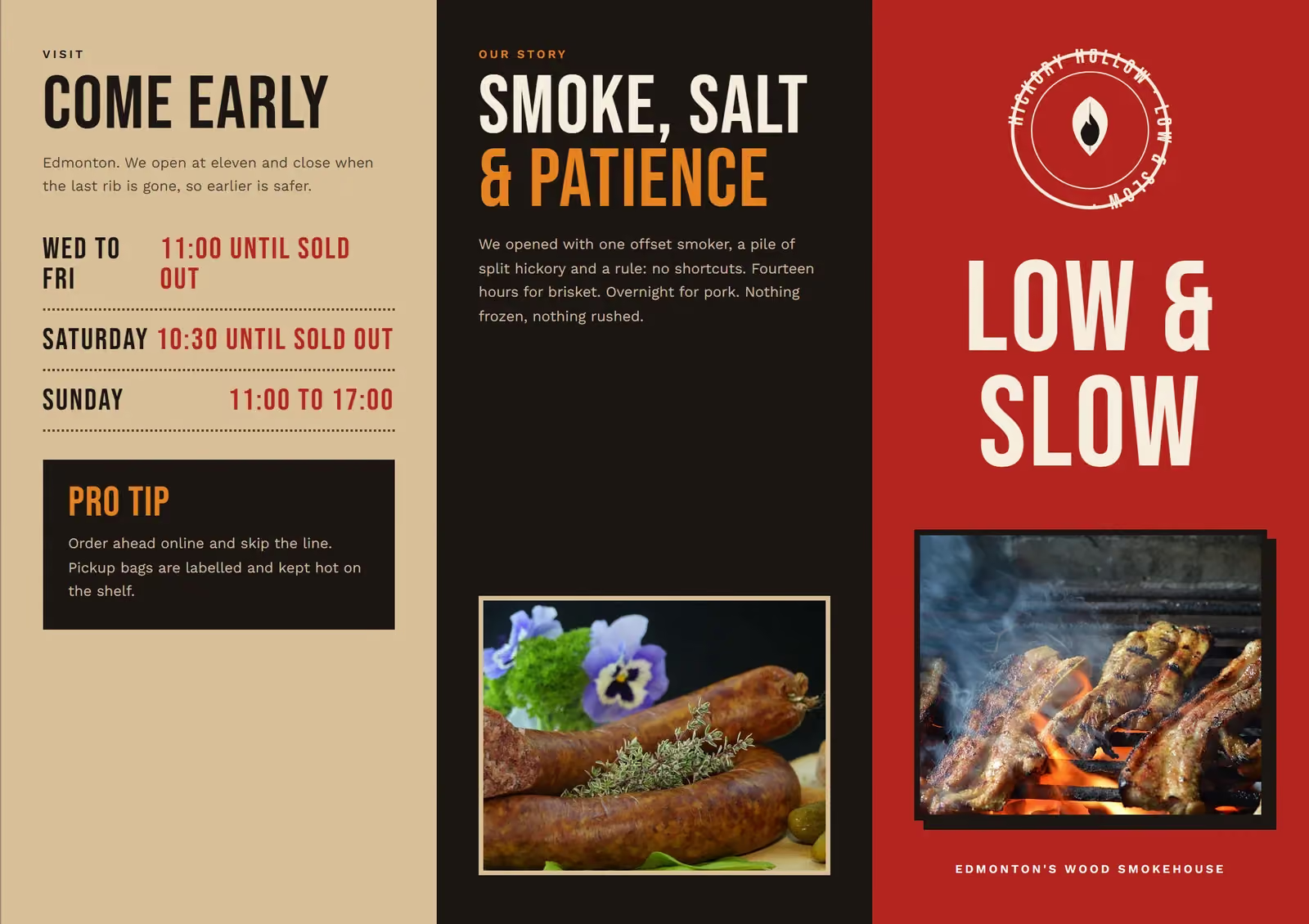
A tri-fold brochure is one sheet folded twice, which makes six panels: three on the outside and three on the inside. People still pick these up at counters, events and in mailboxes. They keep them, they open them slowly and they read them at their own pace. That only works if each panel has a job.
Think in panels, not pages
The reader sees the brochure in a particular order. First the front cover. Then, when it opens, the inside flap. Then the full inside spread. Last, the back panel. Plan the order before you write a word.
- Front cover. A clear promise and one strong image. The reader decides here whether to open it.
- Inside flap. The first thing seen on opening. It should answer “what is this about?” in a few lines.
- Inside spread, two panels. The main content: what you offer, how it works and what makes you different.
- Back panel. Your contact details and a call to action, because it is the panel people look at when the brochure sits on a desk.
- Fold-in panel (outside, second). Often used for hours, location and a short story about the business.
Start with the single action
Decide what you want the reader to do: call, visit, book, order. Put that action on the back panel and on the inside spread. Everything on the sheet should lead toward it.
Write less than you think
Panels are small. A headline, a short paragraph and a few bullet points fill one. Use plain words and short sentences. Cut every sentence that does not help the reader decide. A brochure with too much text goes in the bin.
Choose images that explain
Use photographs of real work, real people and real places. Choose a few strong images over many small ones. Make sure they are sharp and large enough: for print, images should be around 300 pixels per inch at the size they will appear. Blurry images look careless in print.
Know the print basics
- Size. A common A4 tri-fold is a sheet of 297 x 210 mm folded in three, with panels of about 99 mm. The folded panel that tucks inside is trimmed a little narrower so that it closes cleanly. Ask your printer for a template.
- Bleed. Backgrounds and images that reach the edge need to extend about 3 mm beyond the trim line, so no white edge appears when the sheet is cut.
- Safe area. Keep text and logos at least 5 to 8 mm inside the trim and away from the folds.
- Colour. Print uses CMYK, while screens use RGB. Colours can look different on paper, so ask for a proof.
- Paper. A heavier paper feels more substantial, and a lighter paper folds more easily. Ask the printer for samples.
Check the folds
Print a quick draft on a home printer and fold it by hand. Check that each panel appears in the order you planned, that nothing important sits on a fold and that the cover and back face the right way. Many mistakes show up only when you hold the paper.
Proof before you print
Ask for a proof from the printer. Read every word aloud, check every phone number and address, and ask someone who has not seen the brochure to look at it. Print runs cannot be fixed afterwards.
Keep it consistent with your brand
A brochure should look like the rest of your business: the same colours, typefaces and tone as your website and your signs. A brand book makes this easy. Without one, write down the colours and fonts you use and keep them in a single file.
Examples
Each project in the design portfolio includes a tri-fold brochure, with downloadable PDF spreads so you can see how the panels work together. Open one and fold it in your mind.
Related guides
For a single-purpose web page that matches your brochure, read the landing page checklist. To protect your brand across materials, see brand identity and brand book design.
Want a brochure designed?
Tell me about your business, who will read the brochure and what you want them to do. I reply with questions, a plan and a quote, and I prepare print-ready files. You can request a design quote here, see brochure and booklet design, and call, email or message me using the details at the bottom of this page.