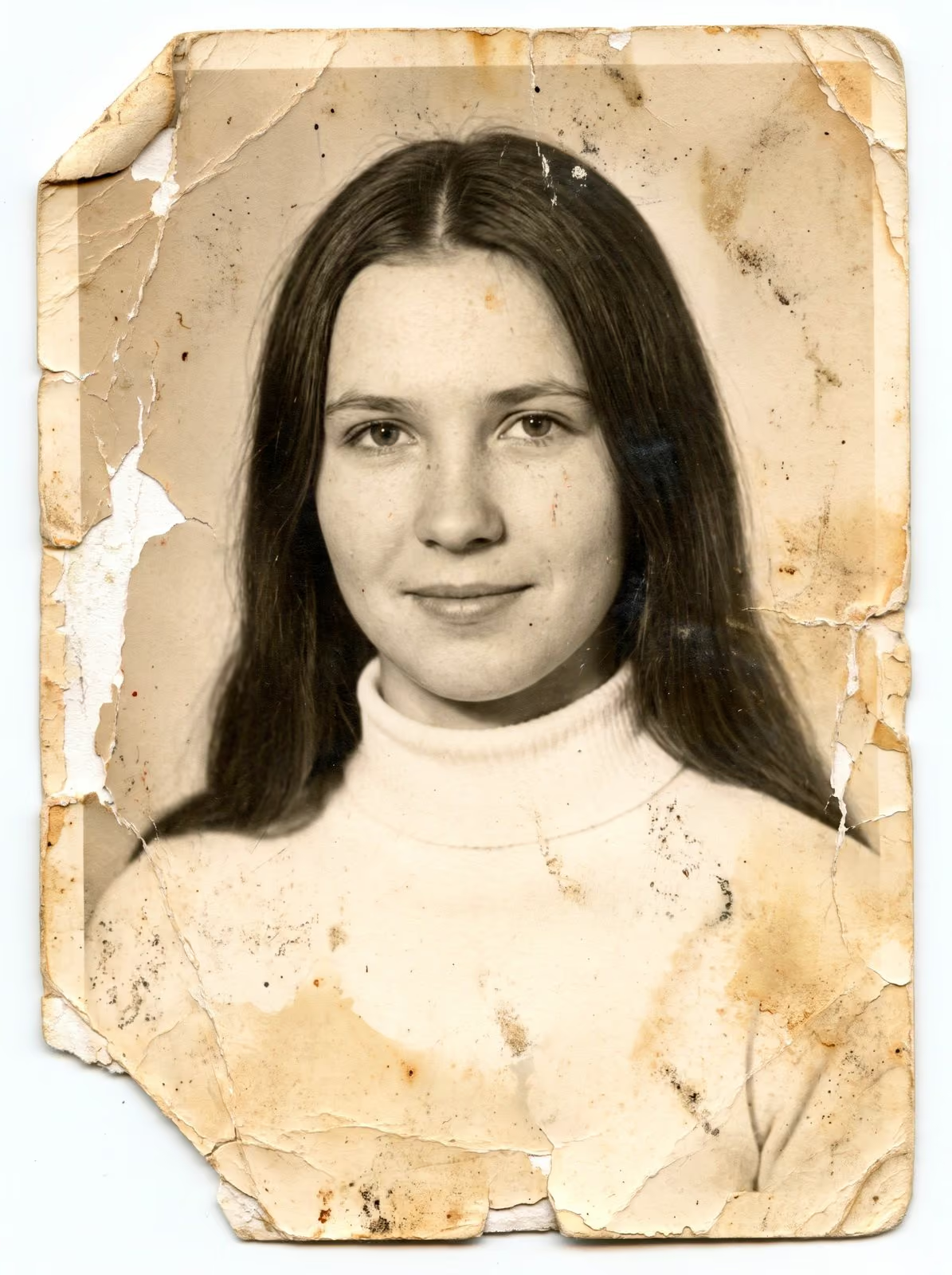
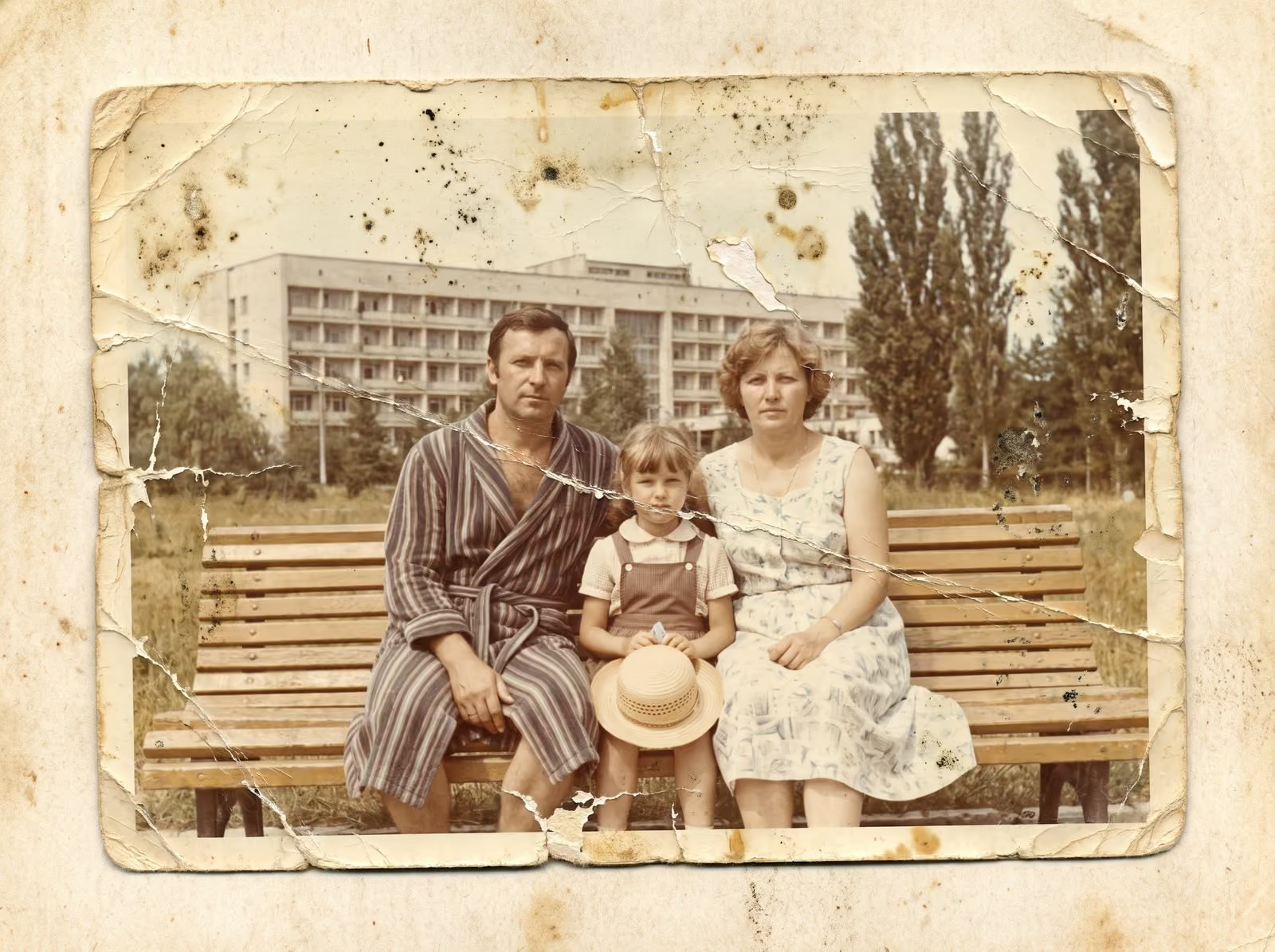
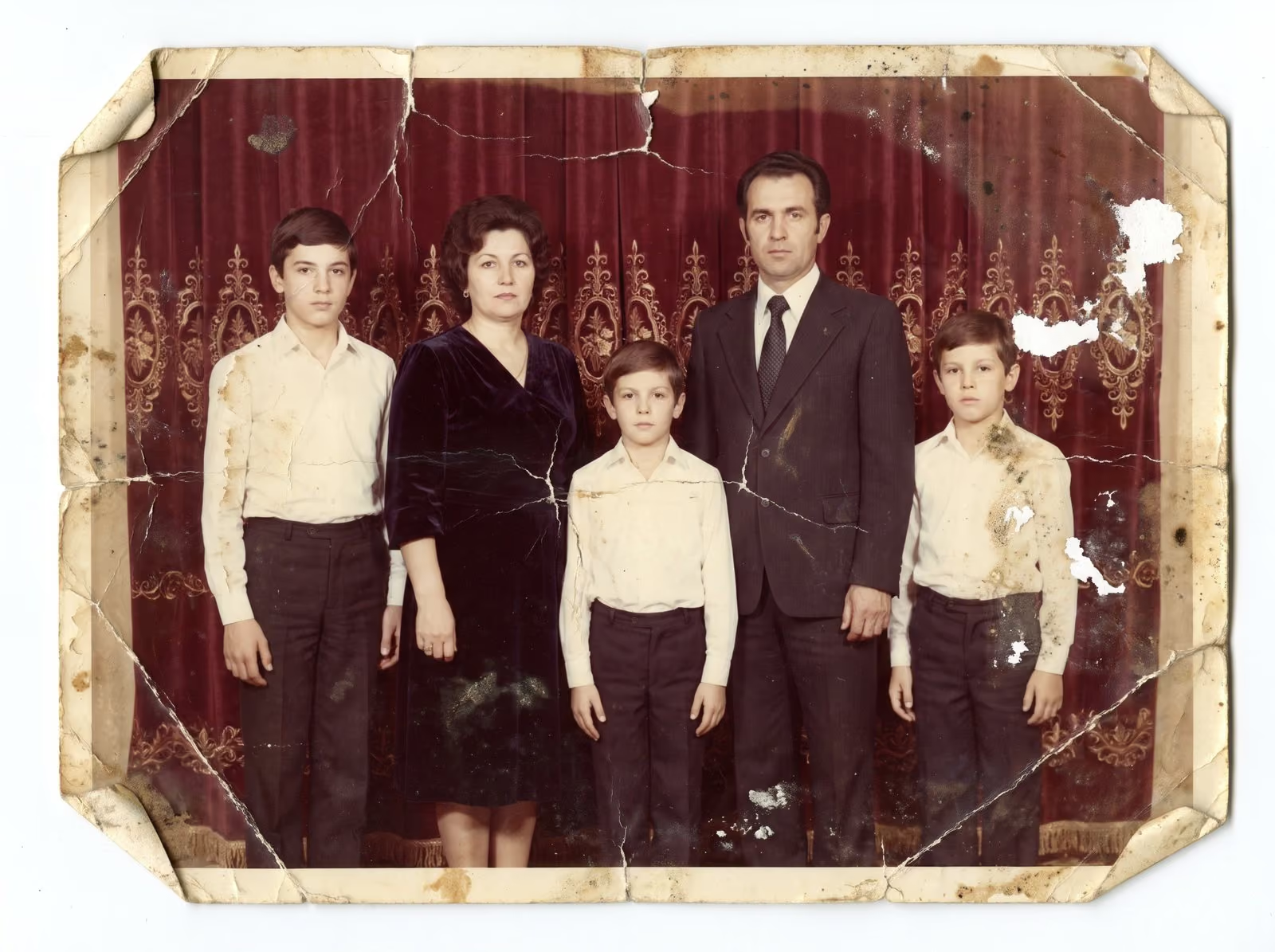
Paper prints are the most fragile family record you own. They fade in albums, stick to plastic sleeves and curl at the corners. A scan stops the clock and gives you a file you can back up, share with relatives and print again.
What I scan
- Snapshots, studio portraits and school photographs
- Wedding and event prints
- Postcards and cabinet cards
- Documents and small certificates that sit among the photos
Prints that are torn, stained or faded can still be scanned. The scan then becomes the starting point for photo restoration.
How it works
- You tell me roughly how many prints you have and what shape they are in.
- I send a quote and a turnaround, usually 3 to 7 business days. Prints are scanned at 600 to 1,500 dpi, depending on the size of the original. The guide to choosing a scanning resolution explains the numbers.
- You drop the prints off in Smoky Lake, arrange a pick-up, or post them with Canada Post.
- I scan each print, check the file against the original and send the files by secure download. Your originals come back to you.
What you receive
JPEG files at 600 to 1,500 dpi (each file is 4 to 35 MB), named so they stay in order. The price includes removing dust, light scratches and fingerprints from glossy photographs. If a print needs more detailed work, I offer photo restoration as an option, so tell me which ones you may want restored.
Good to know
Print scanning takes originals up to A4 (210 x 297 mm). A USB flash drive and shipping are paid separately. Tell me about anything delicate, such as prints stuck in an album, when you ask for a quote, and I tell you how I would handle it. Current prices are on the pricing page.
Edmonton client? Read how it works on the Edmonton page.