Before you ask for a restoration quote, a short look at the photograph tells you a lot. You do not need training. A restorer asks three simple questions, and you can ask them too. The answers point to a level, and they help you describe the photo clearly when you write to me.
Question one: where does the damage sit?
Damage on the surface is the easiest to fix. Dust, small specks, fine scratches and a soft overall fade all sit on top of the picture. The image underneath is intact, so the work is a careful clean-up. This is the territory of Basic restoration at CA$50 per image.
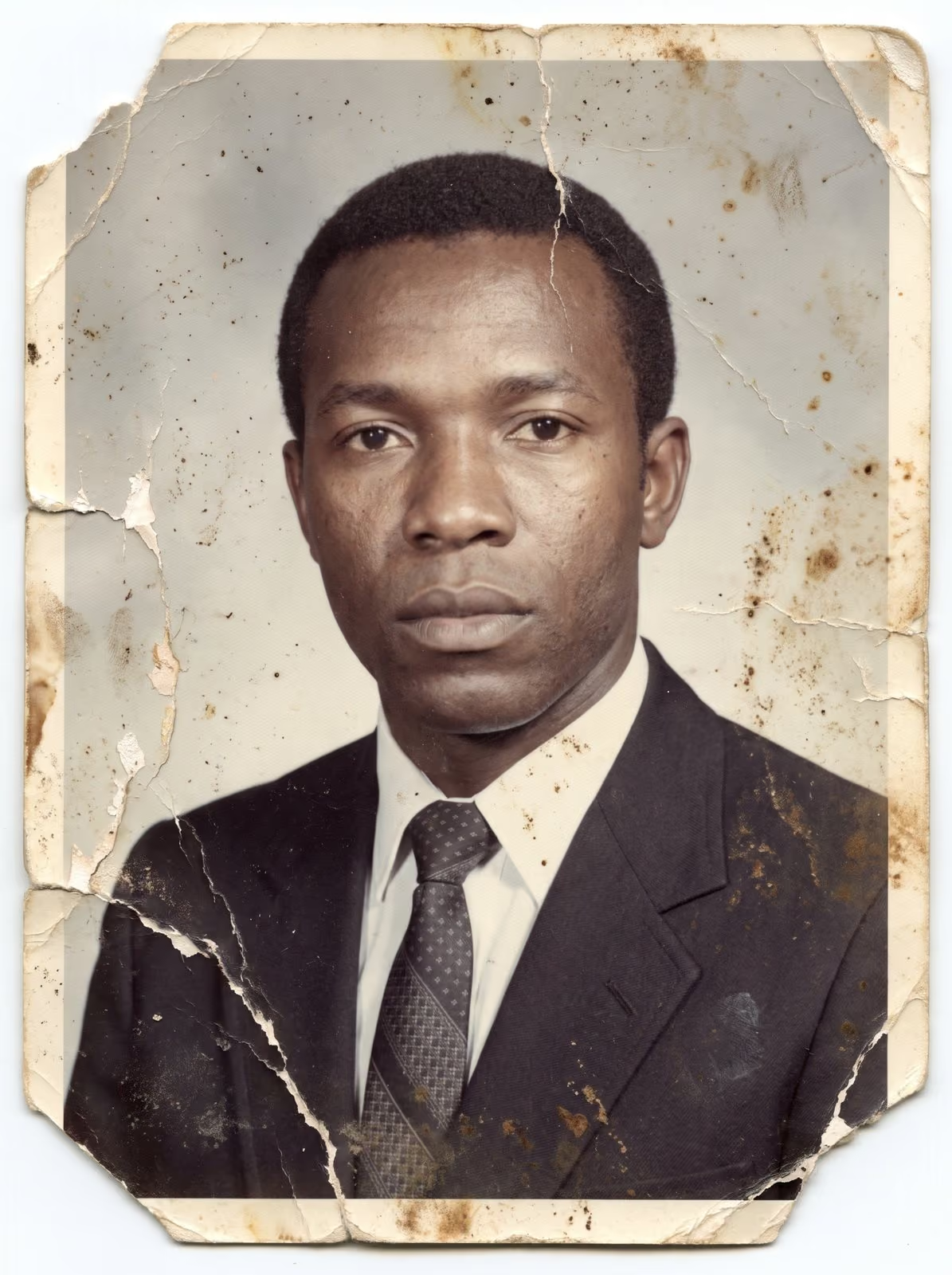
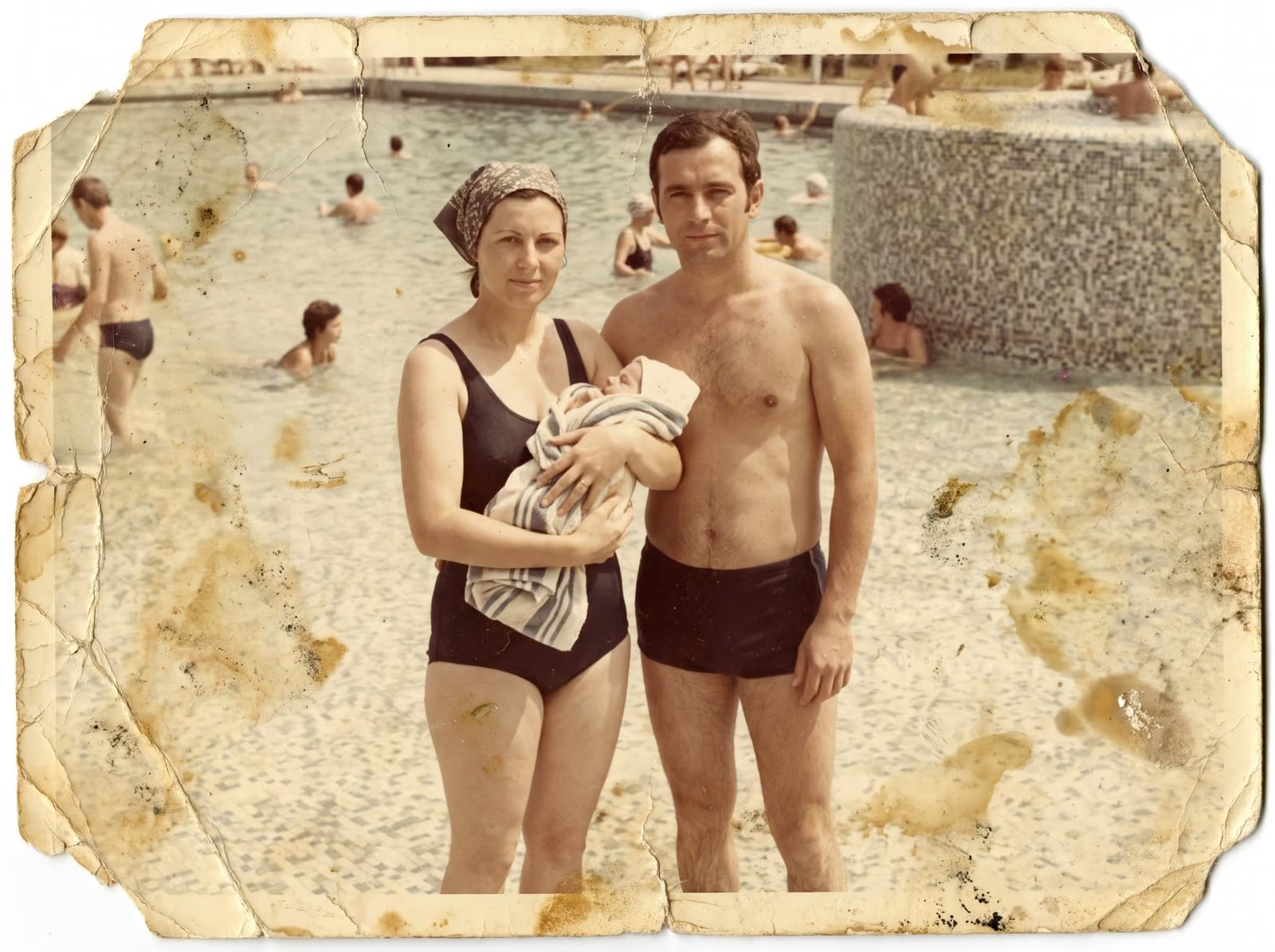
Damage that cuts into the picture takes more work. Creases, stains, deeper scratches and patches of lost colour change what the picture shows. Standard restoration at CA$120 per image covers visible wear of this kind.
Question two: does the damage cross faces or hands?
Look at the people first. Everyone else does. A scratch across a wall is easy to repair. The same scratch across an eye or a mouth needs patient work, because the repair has to look like that person.
A small mark on a face is part of Standard. A crack, a stain or a tear that runs through a face belongs to Advanced at CA$250 per image, because the face has to be rebuilt from what remains.
Question three: is anything missing?
A torn corner, a hole, a flaked-off patch or a section eaten away by mould is missing information. Small gaps in a background can be rebuilt from what surrounds them. Large gaps, or gaps in the middle of a person, need reconstruction.
When faces, clothing or large sections are gone, the photo moves to Premium at CA$500 per image. Reconstruction at this level uses references: other photographs of the same people, the same clothing or the same place. The more you can send, the better the result.
How to look
- Take the photo to a window. Daylight shows more than a lamp.
- Look at the whole picture, then at each face.
- Turn the print slightly. Cracks and creases catch the light at an angle.
- Look at the back. Writing, stamps and glue marks tell a story, and they can explain a stain.
- Do not clean the surface. Rubbing a print can make cracks worse. The guide to first aid for damaged photographs explains what is safe.
What a quick look cannot tell you
Some things hide until the photograph is scanned. A faded face may hold more detail than you can see. A heavy stain may sit over a picture that is still sharp. A print that looks sharp may be soft once it is enlarged. This is why I look at your scan or phone photo before I recommend a level.
Describe the photo in three lines
When you write to me, three lines are enough: what the photo shows, what damage you see and where it sits, and what you plan to do with the result. For example: “Wedding photo from 1974. A crease runs across the bride’s face and the lower left corner is torn off. I want a large print for her daughter.”
A simple way to sort a pile
If you have many photographs, sort them with the same three questions. Put photos with only surface damage in one pile, photos with visible damage in a second and photos with damaged faces or missing parts in a third. The piles give a rough guide to the levels, and I confirm the level for each photo when I see it. Sorting first also tells you how many photographs you really want restored, which is the most useful number for a quote.
Related guides
To see what each level includes, read photo restoration levels from Basic to Premium. To learn about the limits, read what can and cannot be restored.
Send me the photo
A scan or a phone photo is enough to start. I tell you what is realistic, which level fits and what it costs. You can request a restoration quote here, see the restoration portfolio for examples of each kind of damage, and call, email or message me using the details at the bottom of this page.